30 years transforming lives: From Crisis to Progress: Building the Health and Social Care Workforce of the Future
A couple of years ago, the picture across our frontline services was a difficult one. Vacancy rates sat at around 36%, our recruitment systems were creating obstacles for applicants, and our approach to recruitment marketing was not attracting the candidates we needed. For an organisation based in Northern Ireland and Republic of Ireland whose people sit at the heart of everything we do, that position was unsustainable.
While we have made significant progress since then, this is not a story about having all the answers. The workforce challenges facing health and social care remain considerable. Rather, it is a story about how we responded, what we learned and how those lessons are helping us think differently about attracting and retaining talented people.
We knew our systems were working against us, so our HR team came together and worked in collaboration with our front line managers to design an in-house recruitment system that made applying for roles much simpler.
The first version began as a straightforward Microsoft Forms process. Continuous learning runs through everything the team does, and that culture drove the system forward quickly. Using tools such as Power Automate, Microsoft Approvals and Microsoft Bookings, the team built a process that allowed candidates to apply, be shortlisted and book interviews through a single in-house system. Feedback from and collaborativley working with frontline managers was fundamental to ensuring that the changes to the processes were successful.
The people involved were largely self-taught. They treated every challenge as an opportunity to improve the process, taking an iterative approach that proved vital to the project’s success. Looking back, what stands out most is not the technology itself but the mindset behind it: a willingness to learn, innovation and working collaboratively to find better ways of doing things.
Alongside the system work, we recognised that our recruitment marketing was not attracting candidates effectively. We engaged an external agency with significant expertise in this area. Through a collaborative partnership, we overhauled how we presented our roles and, importantly, how we presented Positive Futures as an employer.
These improvements contributed to a reduction in vacancy rates from 36% to 12%. While that represents real progress, recruitment remains challenging across the sector and sustaining that progress requires constant attention and adaptation.
We also worked collaboratively with managers to introduce values-based recruitment questions for our Support Worker and Senior Support Worker roles. Throughout the process, we gathered feedback directly from managers and refined our approach accordingly. The people closest to our services helped shape the process because they understood better than anyone the qualities needed to succeed.
Throughout the journey we collected candidate feedback, which proved invaluable. Some of that feedback was positive, while some highlighted areas where we needed to improve. Communication, timescales and candidate experience all emerged as themes. Listening to that feedback helped us refine our approach and provided the foundation for two important decisions.
The first was the creation of an in-house PR, Marketing and Communications team. The second was our investment in a dedicated Applicant Tracking System through SeeMeHired.
While both decisions were rooted in recruitment, they have implications far beyond recruitment alone.
Looking Ahead: Attracting Talent in a Challenging Environment
Despite the progress we’ve made, recruitment continues to be one of the most significant challenges facing the social care sector.
Many providers have benefited from international recruitment in recent years, but changes in immigration policies and visa requirements mean that route is becoming increasingly difficult. At the same time, organisations across health and social care continue to compete for talented people within a constrained labour market.
Perhaps the biggest challenge of all is one that cannot be ignored: pay.
Positive Futures has been clear in its aspiration to implement the Real Living Wage because we believe health and social care professionals deserve recognition for the skilled, complex and life-changing work they undertake every day. However, this ambition exists within a wider funding environment that remains under significant pressure. At a time when health and social care budgets in Northern Ireland continue to face considerable challenges, it is difficult to see substantial new resources becoming available in the short term.
Improving recruitment processes and employer branding can help, but they cannot solve every workforce challenge. Some issues require wider political, financial and societal solutions.
That said, organisations still have a responsibility to make themselves places where talented people want to work.
For Positive Futures, one of the most important lessons from our recruitment journey is that people are increasingly looking for more than a salary. They want purpose, development opportunities, strong leadership, flexibility, values and the chance to make a meaningful contribution.
We believe Positive Futures offers exactly that.
Whether someone joins us as a frontline colleague, a Behaviour Support specialist, a Service Manager, a member of our corporate teams or a future leader, they join an organisation that is driven by its values and committed to continuous improvement.
We also know that some of our future talent may not come from traditional social care backgrounds.
Across our organisation, colleagues bring experience from education, healthcare, hospitality, retail, industry, communications, technology and many other sectors. Many possess leadership skills, technical expertise and valuable life experience that translate exceptionally well into social care. Increasingly, we need to challenge assumptions about who belongs in our sector and recognise the significant contribution people can make when they bring fresh perspectives and transferable skills.
That is why employer branding and storytelling have become so important.
The creation of our PR, Marketing and Communications team was not simply about promoting vacancies. It was about sharing the story of Positive Futures. It was about helping people understand who we are, what we stand for and the impact our colleagues have every day.
Stories remain one of the most powerful ways of demonstrating the value of social care. They help potential candidates connect with our purpose in a way no job description can. They also help commissioners, partners and stakeholders understand the difference that skilled, committed colleagues make to the lives of the people we support.
Alongside this, our investment in SeeMeHired is helping us better understand how candidates engage with us, which recruitment approaches are most effective and where opportunities for improvement exist. The system has improved candidate experience, but it has also provided valuable insight that allows us to make more informed decisions.
This reflects a wider theme that is becoming increasingly important across Positive Futures in Northern Ireland and the Republic of Ireland. Innovation is not simply about technology. It is about being willing to learn, adapt and use evidence to improve. The recruitment journey has demonstrated what can happen when colleagues embrace new ideas, use digital tools intelligently and focus relentlessly on continuous improvement.
The workforce challenges facing social care are far from over. However, I am encouraged by the progress we have made and by the culture that sits behind it. If we are to attract the next generation of talented professionals into our sector, whether from frontline practice, specialist disciplines, leadership roles or other industries, we must continue to innovate, continue to learn and continue to show why organisations like Positive Futures are places where people can build meaningful and rewarding careers.
This journey has shown us that while we cannot control every challenge, we can influence how we respond to them. For me, that is perhaps the most important lesson of all.
If you are looking for a career where you can make a genuine difference, develop your skills and be part of an organisation committed to continuous improvement, we’d love to hear from you. See our full list of vacancies on our careers page.
Positive Futures plants 30 trees to mark 30 years transforming lives
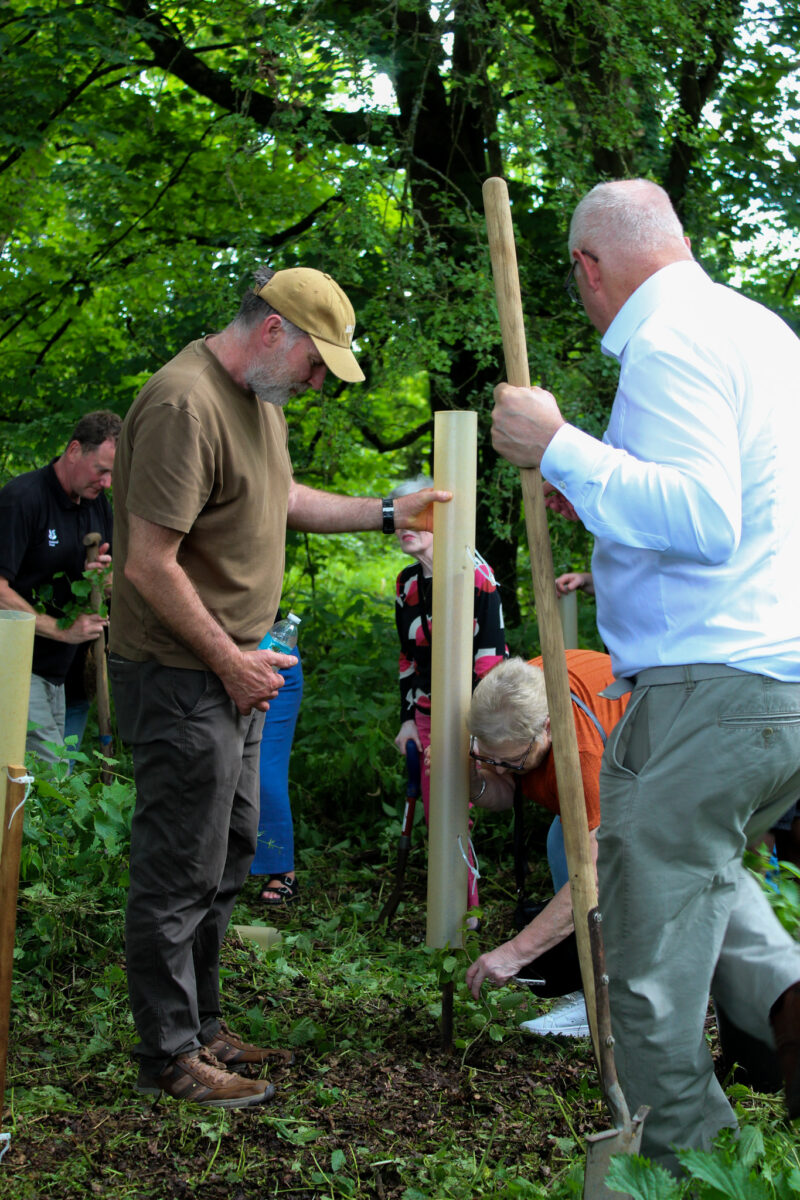
All Ireland learning disability, acquired brain injury and autism charity, PositiveFutures, continues to celebrate its 30th anniversary with a special tree planting event at Crom Estate National Trust in Fermanagh recently.
Thirty native trees, donated by the National Trust, were planted to symbolise three decades of supporting people to live the lives they choose. The event brought together staff and people supported by the charity, with Councillor Debbie Coyle, Chair of Fermanagh and Omagh District Council also in attendance.
Staff from the National Trust, partnering with Positive Futures on a number of planting initiatives over the next two years, were on hand to provide expert guidance and the planting team embraced the occasion with enthusiasm, enjoying the opportunity to contribute to a meaningful environmental initiative outside of the office.
The planting event supports the National Trust’s ‘Roots to Recovery’ project, which aims to enhance biodiversity and improve natural habitats across its properties.
Chair of Fermanagh and Omagh District Councillor Debbie Coyle commented,
“I would like to sincerely congratulate Positive Futures on celebrating 30 years of outstanding work supporting people with learning disabilities, acquired brain injuries and autism to live the lives they choose.
Their dedication, compassion and commitment have made a real and lasting difference to individuals, families and communities right across our district.
It was a pleasure to join them at this special tree planting event, which not only marks this significant milestone but also highlights their continued focus on inclusion, wellbeing and creating opportunities for people to thrive.”
Dr Agnes Lunny OBE, added: “Events like these are so good for the soul, our staff from our head office and local services get some well-earned time out of the office and the people we support, together with their support staff, have hopefully had a great day out. We had promises from several for attendees to come back to do some more planting with the National Trust team. We can’t wait to see what else this partnership will bring.”
Stevie McMullan, Project Manager at the National Trust, said:
“The tree planting event was met with great enthusiasm from everyone involved, and we were delighted to support Positive Futures as they marked this significant 30th anniversary milestone. Initiatives such as this demonstrate the power of nature to bring people together, enhance wellbeing and create a lasting legacy for the environment.
This event also represents one of the first steps in what we hope will be a strong and enduring collaboration. Through our DAERA-funded Roots to Recovery project, we are working to restore habitats, increase biodiversity and help more people connect with nature.
Positive Futures will play an important role in this work, from collecting tree seeds and supporting propagation in our new nursery to helping plant trees across National Trust properties. We look forward to working together to deliver meaningful and lasting benefits for both people and nature.”
30 years transforming lives: Three decades of person-centred support, person-centred by design
By Paul Roberts, Executive Director, Positive Futures
I sometimes feel as though I’ve spent more than thirty years trying to unpick the meanings of words most people take for granted. “Care.” “Support.” “Service user.” Words that slip off the tongue yet carry assumptions about the people they describe and those doing the describing.
My journey into social care began long before I understood how powerful those words were. In the late 1980s, I was a young social worker in the northwest of England, immersed in the ongoing debates about the divide between health and social care. It was a time of boundary drawing and disagreements, but what struck me most was how arguments were often disguised as definitions. Whether someone was “ill” or “in need”, whether a task was “clinical” or “domestic”, whether funding followed a “case” or supported a person, it all too often seemed to come down to language.
Those early experiences led me into advocacy, community work, and the rights-based movements emerging in Liverpool and Manchester. I gravitated toward people exploring ideas we now call person-centred thinking, influenced by pioneers like John O’Brien and Wolf Wolfensberger. Their insistence that services should be organised around people’s needs and wishes rather than people being expected to just fit into what was provided, never left me.
Northern Ireland: Returning to a System That Spoke a Different Language
When I returned to Northern Ireland in 1992, the contrast was striking. I remember explaining to someone that I worked in advocacy, only to be met with: “What’s advocacy?” We were still operating in a system heavily influenced by institutional thinking, and the medical model.
When Agnes Lunny, then my manager, now our CEO and I came together to form Positive Futures in 1995 we were united on our belief that services should fit around people, not the other way around. We arrived at that belief through different routes, but the connection was immediate. People’s rights were not an optional extra, but the foundation of our work.
Those early days were full of moments that reminded us how much language reveals. Systems spoke about “beds”, “placements” and “cases”. Rarely did anyone ask about families, friends or aspirations. People were moved, placed, processed; their lives described in shorthand and jargon. We knew that we wanted to build something different, and the language we used has always been central.
Why the Words We Use Matter More Than We Admit
If someone is described as a “placement”, we place them.
If they become a “case”, we process them. If we label them “challenging”, we brace for difficulty before we even meet the person. Similarly, if people are “service users” the perception is they do not contribute to their community or if someone’s placement fails, it is because they didn’t do what was wanted or expected of them.
Conversely, when we use the language of citizenship, relationships, possibility and home, we begin to build services and lives that reflect those things.
That is why the Social Care Future movement speaks to me. Their vision, that each of us should be able to “live in the place we call home, with the people and things we love, in communities where we look out for each other, doing the things that matter to us,” captures the humanity that sits at the heart of all good support.
Their Changing the Story work recognises a difficult truth: that unless we change the public story about social care – how it is spoken about, imagined, and understood, service reform will always lag people’s desire for a good life. Their efforts to reshape the narrative, grounded in research and storytelling, mirror what many of us have witnessed for decades: that language is not decorative, but instead a driver of change.
The Pull Toward Gloriously Ordinary Language
The Gloriously Ordinary Language programme takes this even further. Their simple question. “Would you use this language around your kitchen table?” cuts straight to the problem. They point out, quite rightly, that too much of our professional speech feels clinical, bureaucratic, or detached from the everyday world.
Their focus on purpose, people and practice challenges organisations to rethink both the tone and the thinking behind their words. Many teams across the GB are apparently now working through how to rehumanise language so that it reflects real relationships and real lives, not transactions or processes.
At Positive Futures, that instinct has been part of our DNA for nearly three decades. For example, we don’t use the term “client” or service user” here; we talk about “John” or “Mary” or the “people we support”. I know we can all be guilty of using grandiose language in our job descriptions or policies and that is something we are always looking to address throughout the organisation. But in how we work with the people we support and our person-centred approach to social care, we have been unwavering.
Doing With, Not Doing For: A Lifelong Lesson
One of the biggest shifts in my thinking came when I realised that “care”, as most people understood it, was often rooted in “doing for” someone. Lighting the fire. Making the meal. Ensuring safety. All important tasks but they can easily overshadow the person’s own agency.
True support is about doing with; walking alongside someone, recognising their talent, believing in their capabilities, and understanding their hopes and dreams. Language signals whether we see people as passive recipients or active citizens. It shapes what staff believe their role is.
Our approach is grounded in that belief that people should not simply receive a service, but be empowered to shape their own future, with choice, control and connection at the centre. A variety of person-centred tools are used throughout what we do to help us learn and understand what a “perfect week” looks like for each person. By thinking about what each person would like to do with their support, we can work out what is achievable to enable them to strive for the life they want.
The future for Positive Futures
As Positive Futures celebrates its thirtieth year, I’ve been reflecting on how person‑centred practice has evolved and how it still needs to. With our CEO, Agnes Lunny, preparing to retire at the end of 2026 after more than three decades of leadership, this feels like the right moment to reaffirm the values we were founded on. It’s also why we’re so pleased to be working again with Helen Sanderson as we look to the future.
In many ways, this work brings us back to our roots — to the belief Agnes and I shared from the beginning: people’s lives should shape the services that support them, not the other way around.
Reconnecting with our roots: working with Helen Sanderson
Our long relationship with Helen Sanderson has helped us stay grounded in person‑centred values. Helen has consistently challenged us to look not only at how we support people, but also at how we support our staff. If we expect person‑centred practice in services, we must model it in our teams. That principle shapes our culture as much as it shapes our practice.
This year, we’ll be deepening that relationship. Helen will lead an intensive programme focused on the full breadth of person‑centred approaches — from team agreements and thoughtful job roles to Positive and Productive Meetings and person‑centred supervision. Psychological safety will run through all of this, creating the conditions for honesty, creativity and learning. It’s the foundation of authentic person‑centred work.
By May 2026, we expect to have a clearer picture of how person‑centred practice should live not just in what we do, but in how we lead and behave. Our full senior team will be involved to ensure this becomes embedded throughout the organisation.
For those unfamiliar with her background: Helen brings more than thirty years of experience, has authored over twenty books, and pioneered tools such as One‑Page Profiles and Person‑Centred Reviews. She worked with us in the early days to develop our person-centred approach to the people we support and our staff, and our Positive and Productive Meetings model — approaches that still sit at the heart of how we work today.
Emerging Directions — A Taste of What’s to Come
Over the last year, several themes have begun to surface in conversations across the organisation, sign-pointing areas that may need more attention and that will shape our work with Helen.
We’ve been asking ourselves how consistently we use person‑centred tools, what “good” staff supervision and meetings look like, and how confident teams feel in using things like one‑page profiles or team agreements. We’ve also reflected on how well our recruitment and induction processes reflect our values.
Turning reflection into direction
This is where the upcoming workshops with Helen Sanderson will be so valuable. Over the next few months, people from across Positive Futures will come together to explore, what’s working well, where practice is inconsistent, and what person‑centred work looks like in our day‑to‑day lives.
These workshops will test our thinking, challenge old habits and help us understand what needs to shift so that our values show up not only in our language, but in our actions.
The insights from this process will shape the plan we develop. It won’t be a glossy statement, it will be a practical, evidence‑based framework that reflects real voices and real practice.
Doing with, not doing for, what it means today
“Doing with” has been core to our approach for decades, but it’s something we must continue to pay attention to. The pressures of the social care system can easily push us back toward rotas, tasks and paperwork. The workshops will help us look honestly at where “doing with” is strong, where it’s slipping, and what teams need to do to keep this principle alive. This isn’t about adding more forms or processes. It’s about building confidence, clarity and connection that enable genuine person‑centred work.
As we move into this next stage with a new CEO, one thing is clear: we’re not reinventing who we are. We’re strengthening the Positive Futures legacy. Our aim is simple – to make sure our founding values aren’t just present in how we talk or the language we use, but visible in everything that we do. We want to be able to evidence our person‑centred approach to help us improve and remain accountable and demonstrate to the people we support, their families, regulators and commissioners what matters most: that people’s lives and choices come first.
For now, we’re doing what good person‑centred organisations do — listening, reflecting and preparing for the next step.
What kind of life could you build – if the world had already decided your future for you?
For so many people with a learning disability, autism or acquired brain injury, the answer used to be heartbreakingly limited. A place in a group home. A seat at a day centre. Maybe a hospital bed. A life built around other people’s decisions – not your own.
That was the reality I wanted to change when, thirty years ago, I helped start Positive Futures. As we mark our 30th anniversary, I’ve been thinking about where it all began, the progress we’ve made, and the work that still lies ahead.
The Gap in the System
When I was a young social worker, my first job was in a secure juvenile justice unit. I met teenagers with a learning disability who had committed offences – but it was painfully clear to me that they were victims too.
Some didn’t even really understand what they’d done. What struck me most wasn’t just their behaviour, but the lack of understanding that they had experienced in their young lives.
Later, working with Barnardo’s, I saw another kind of gap. Young people with a learning disability whose choices for adulthood were largely living in a residential or nursing home or a specialist hospital. I remember thinking, If this were my child at 18, would I accept that? Of course not. And if it wasn’t good enough for my family, it wasn’t good enough for anyone else’s either.
That’s where Positive Futures began – with that question. What if we built something better? Something human, dignified, and real?
A New Approach
When I co-founded Positive Futures in 1995, social care in Northern Ireland were still rooted in institutional thinking. The system was in slow transition — from long-stay hospitals and group homes towards community-based living — but choice and autonomy were far from guaranteed. Support was largely professional-led and diagnosis-driven, with autism often lumped under “mental handicap” or “learning disability.” Person-centred planning was rare, and services were allocated based on perceived risk and available resources, not the aspirations of the individual.
There were still assumptions that the only way to support people was in groups and – in order to be financially viable – these had to be large groups. I remember being told I needed to get my head out of the clouds when I said people could live in ordinary houses. People were told they couldn’t. But I didn’t believe that.
We were also told that we shouldn’t ask families what they wanted, because it would be impossible to meet their needs and aspirations. But what we discovered was that families ask for so little. They just wanted an ordinary life for their loved ones.
From the very beginning, I built Positive Futures in deep partnership with families. They were the heartbeat. They helped design what we were building. They held us to our values. We started with a small group of people in Bangor, County Down, offering something radically different: the idea that people with a learning disability, autism or acquired brain injury could live in ordinary houses, be tenants, be part of their communities, and make their own choices.
This was long before self-directed support, personal budgets or direct payments were standard. But we were already working in a way that reflected those future models — building support around the individual, rather than placing an individual into a service which had a “void”.
Person-Centred Support: Not a Buzzword, A Promise
“Person-centred” is a term that gets used a lot in social care — sometimes so much that it loses its meaning. But at Positive Futures, it has always been at the heart of our values. For us, it’s a promise: to really listen. To design support around what matters to each person. And to recognise that being different doesn’t mean needing less.
I often explain it this way: I’m registered blind, and if I received support which didn’t take account of my blindness, it would simply not work.
Being person-centred means asking the right questions: What does a good day look like for you? Who do you want in your life? Where do you want to live, and how? From the way someone eats their breakfast to how they spend their weekends, every detail matters, because every detail is part of a life.
You can see this commitment across all our services. In Supported Living, people can live where and how they choose. In our Family Support Services, we respond flexibly to the needs of the whole family. We don’t ask people to fit into our services – we build our services and supports around them.
Rooted in Relationship
An approach which we introduced to Northern Ireland over 30 years ago and something that I am really proud of is our Families Matter Shared Lives service. It gives adults with a learning disability, autism or acquired brain injury the chance to be supported by another family or individual — someone with time to give, and often, space in their home. That support might be long-term, overnight, or during the day. But what makes it special is the relationships it creates.
One story that stays with me is of a Shared Lives carer who has offered a home to a young person for the past 42 years. That young person has grown up, matured, and lives as part of that family — with the kind of consistency, love and belonging that just wouldn’t have been possible in many traditional settings. He hasn’t moved through services. He has stayed in one place, surrounded by people who truly know and love him.
For me, Shared Lives reflects our fundamental belief: that real support is built on connection, trust and consistency. When those things are in place, people don’t just receive support – they experience stability and belonging in a life where they have choice and control.
Ordinary People, Extraordinary Work
Central to everything we’ve achieved are the people who choose to work at Positive Futures. From the beginning, we’ve looked for people with heart — those who bring compassion, values, and a willingness to listen. Qualifications matter, of course, but they’re not where we start. What matters most is how someone shows up for others.
We want people who understand that doing with is not the same as doing for. People who take real pleasure in seeing others achieve. That approach has shaped a culture where our team members don’t just join us – they grow with us.
Many of our leaders began their journeys in support roles. Our Director of Operations for the Republic of Ireland started as a Support Worker. So did our newest Operations Manager in Northern Ireland Another colleague joined as a Relief Support Worker and now helps shape our people strategy from within HR. We invest in people because we believe in them.
Leadership, to me, means being present. I’ve always believed in staying close to the people we support and the staff who make that support possible. I make it a priority to know our teams, the people we support and their families. That’s how I lead – by staying connected, listening, and making sure every person feels seen, heard and valued.
A Lifeline for Families
At Positive Futures, we’ve always understood that where there is someone with a disability in a family, the whole family needs support. That’s why we developed our Family Support Services. These services not only work directly with the child or young person, building their skills and confidence, but they also provide support to brothers, sisters, mums and dads, so as to build the resilience and confidence of the whole family and to give them a much-needed break.
We also provide residential short breaks at our Wheatfield Short Break service creates space for individuals to relax, build confidence, and enjoy new experiences in a safe, familiar environment. And it gives families something just as important — time to rest, to mark milestones, or recharge their batteries, knowing their loved one is in trusted hands.
It is designed to feel like a home from home — not clinical or institutional, but warm, welcoming and real.
Changing the System, One Step at a Time
At Positive Futures, we’ve always been focused on evolving our work to meet real needs. Over the years, that’s meant introducing new approaches — like our Shared Lives service, or developing a futures planning project to support older carers. We never believed in simply maintaining services; we’ve always asked what’s missing, and how we can fill that gap.
One of the clearest examples of how listening has shaped our work came from a conversation with a father. He told me he prayed every night that his daughter would die before him — because he was afraid of what would happen to her without him there. That level of fear and uncertainty is something no family should face alone. So we acted. We created a futures planning project – Better Futures – to help families think ahead, make arrangements, and find peace of mind. That’s how we’ve always worked: by listening closely, and building what people truly need.
A major milestone came when we expanded into the Republic of Ireland over a decade ago. I remember wondering whether what we had built could really be replicated — or whether it had been a one-off. But when I saw how naturally our values carried across, I felt deeply reassured. The way we work resonated just as strongly, and that’s something I still find incredibly exciting as our journey in the Republic continues to grow.
A Mission That Endures
As I look ahead, I know the work of Positive Futures is far from finished. And that’s exactly as it should be. Real change takes time — and the needs of the people we support continue to evolve. So we must evolve too.
One of the biggest changes I still hope to see — not just in our work, but across the whole sector — is a real shift toward prevention and early intervention. Too often, the system barrels forward into crisis after crisis, funding only what’s already broken. But I’ve always believed that if we get in early, we can help families stay together. We can stop things falling apart.
I’ve never met a family who wanted to put their child into care. That family doesn’t exist. What they want is help — early, practical, human help. And I believe that’s where we can make the most meaningful difference.
Above all, we need to keep listening — really listening — to the people we support and their families. They are the ones living these experiences every day. When we design support around their lives, their choices, and their hopes, everything changes. That’s how we create something meaningful. We support other people’s sons and daughters. What a responsibility that is — but what a privilege.