
What kind of life could you build – if the world had already decided your future for you?
For so many people with a learning disability, autism or acquired brain injury, the answer used to be heartbreakingly limited. A place in a group home. A seat at a day centre. Maybe a hospital bed. A life built around other people’s decisions – not your own.
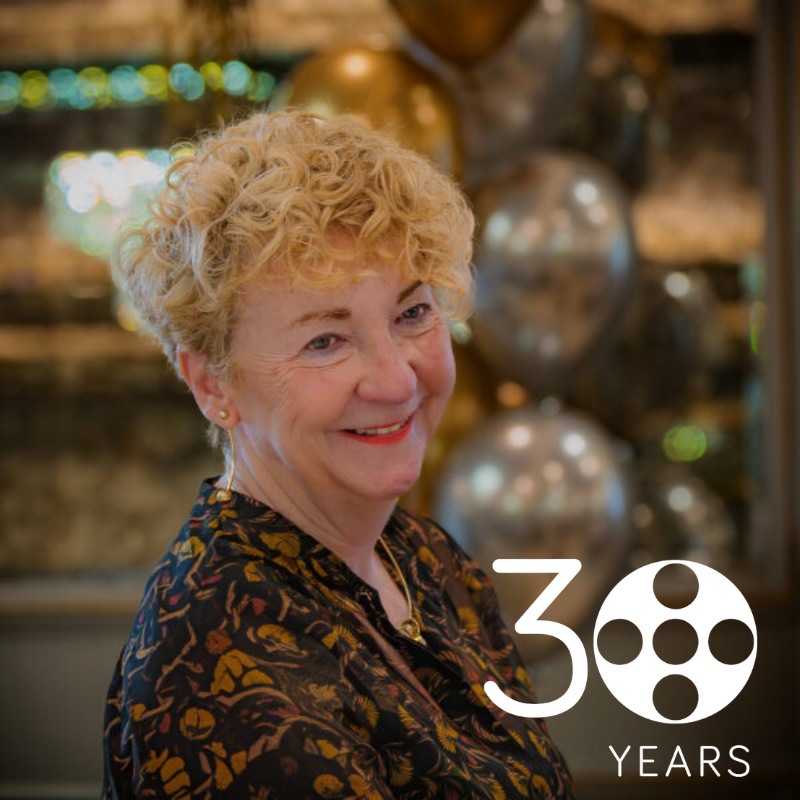
That was the reality I wanted to change when, thirty years ago, I helped start Positive Futures. As we mark our 30th anniversary, I’ve been thinking about where it all began, the progress we’ve made, and the work that still lies ahead.
The Gap in the System
When I was a young social worker, my first job was in a secure juvenile justice unit. I met teenagers with a learning disability who had committed offences – but it was painfully clear to me that they were victims too.
Some didn’t even really understand what they’d done. What struck me most wasn’t just their behaviour, but the lack of understanding that they had experienced in their young lives.
Later, working with Barnardo’s, I saw another kind of gap. Young people with a learning disability whose choices for adulthood were largely living in a residential or nursing home or a specialist hospital. I remember thinking, If this were my child at 18, would I accept that? Of course not. And if it wasn’t good enough for my family, it wasn’t good enough for anyone else’s either.
That’s where Positive Futures began – with that question. What if we built something better? Something human, dignified, and real?
A New Approach
When I co-founded Positive Futures in 1995, social care in Northern Ireland were still rooted in institutional thinking. The system was in slow transition — from long-stay hospitals and group homes towards community-based living — but choice and autonomy were far from guaranteed.
Support was largely professional-led and diagnosis-driven, with autism often lumped under “mental handicap” or “learning disability.” Person-centred planning was rare, and services were allocated based on perceived risk and available resources, not the aspirations of the individual.
There were still assumptions that the only way to support people was in groups and – in order to be financially viable – these had to be large groups. I remember being told I needed to get my head out of the clouds when I said people could live in ordinary houses. People were told they couldn’t. But I didn’t believe that.
We were also told that we shouldn’t ask families what they wanted, because it would be impossible to meet their needs and aspirations. But what we discovered was that families ask for so little. They just wanted an ordinary life for their loved ones.
From the very beginning, I built Positive Futures in deep partnership with families. They were the heartbeat. They helped design what we were building. They held us to our values.
We started with a small group of people in Bangor, County Down, offering something radically different: the idea that people with a learning disability, autism or acquired brain injury could live in ordinary houses, be tenants, be part of their communities, and make their own choices.
This was long before self-directed support, personal budgets or direct payments were standard. But we were already working in a way that reflected those future models — building support around the individual, rather than placing an individual into a service which had a “void”.
Person-Centred Support: Not a Buzzword, A Promise
“Person-centred” is a term that gets used a lot in social care — sometimes so much that it loses its meaning. But at Positive Futures, it has always been at the heart of our values. For us, it’s a promise: to really listen. To design support around what matters to each person. And to recognise that being different doesn’t mean needing less.
I often explain it this way: I’m registered blind, and if I received support which didn’t take account of my blindness, it would simply not work.
Being person-centred means asking the right questions: What does a good day look like for you? Who do you want in your life? Where do you want to live, and how? From the way someone eats their breakfast to how they spend their weekends, every detail matters, because every detail is part of a life.
You can see this commitment across all our services. In Supported Living, people can live where and how they choose. In our Family Support Services, we respond flexibly to the needs of the whole family. We don’t ask people to fit into our services – we build our services and supports around them.
Rooted in Relationship
An approach which we introduced to Northern Ireland over 30 years ago and something that I am really proud of is our Families Matter Shared Lives service. It gives adults with a learning disability, autism or acquired brain injury the chance to be supported by another family or individual — someone with time to give, and often, space in their home. That support might be long-term, overnight, or during the day. But what makes it special is the relationships it creates.
One story that stays with me is of a Shared Lives carer who has offered a home to a young person for the past 42 years. That young person has grown up, matured, and lives as part of that family — with the kind of consistency, love and belonging that just wouldn’t have been possible in many traditional settings. He hasn’t moved through services. He has stayed in one place, surrounded by people who truly know and love him.
For me, Shared Lives reflects our fundamental belief: that real support is built on connection, trust and consistency. When those things are in place, people don’t just receive support – they experience stability and belonging in a life where they have choice and control.
Ordinary People, Extraordinary Work
Central to everything we’ve achieved are the people who choose to work at Positive Futures. From the beginning, we’ve looked for people with heart — those who bring compassion, values, and a willingness to listen. Qualifications matter, of course, but they’re not where we start. What matters most is how someone shows up for others.
We want people who understand that doing with is not the same as doing for. People who take real pleasure in seeing others achieve. That approach has shaped a culture where our team members don’t just join us – they grow with us.
Many of our leaders began their journeys in support roles. Our Director of Operations for the Republic of Ireland started as a Support Worker. So did our newest Operations Manager in Northern Ireland Another colleague joined as a Relief Support Worker and now helps shape our people strategy from within HR. We invest in people because we believe in them.
Leadership, to me, means being present. I’ve always believed in staying close to the people we support and the staff who make that support possible. I make it a priority to know our teams, the people we support and their families. That’s how I lead – by staying connected, listening, and making sure every person feels seen, heard and valued.
A Lifeline for Families
At Positive Futures, we’ve always understood that where there is someone with a disability in a family, the whole family needs support. That’s why we developed our Family Support Services. These services not only work directly with the child or young person, building their skills and confidence, but they also provide support to brothers, sisters, mums and dads, so as to build the resilience and confidence of the whole family and to give them a much-needed break.
We also provide residential short breaks at our Wheatfield Short Break service creates space for individuals to relax, build confidence, and enjoy new experiences in a safe, familiar environment. And it gives families something just as important — time to rest, to mark milestones, or recharge their batteries, knowing their loved one is in trusted hands.
It is designed to feel like a home from home — not clinical or institutional, but warm, welcoming and real.
Changing the System, One Step at a Time
At Positive Futures, we’ve always been focused on evolving our work to meet real needs. Over the years, that’s meant introducing new approaches — like our Shared Lives service, or developing a futures planning project to support older carers. We never believed in simply maintaining services; we’ve always asked what’s missing, and how we can fill that gap.
One of the clearest examples of how listening has shaped our work came from a conversation with a father. He told me he prayed every night that his daughter would die before him — because he was afraid of what would happen to her without him there. That level of fear and uncertainty is something no family should face alone. So we acted. We created a futures planning project – Better Futures – to help families think ahead, make arrangements, and find peace of mind. That’s how we’ve always worked: by listening closely, and building what people truly need.
A major milestone came when we expanded into the Republic of Ireland over a decade ago. I remember wondering whether what we had built could really be replicated — or whether it had been a one-off. But when I saw how naturally our values carried across, I felt deeply reassured. The way we work resonated just as strongly, and that’s something I still find incredibly exciting as our journey in the Republic continues to grow.
A Mission That Endures
As I look ahead, I know the work of Positive Futures is far from finished. And that’s exactly as it should be. Real change takes time — and the needs of the people we support continue to evolve. So we must evolve too.
One of the biggest changes I still hope to see — not just in our work, but across the whole sector — is a real shift toward prevention and early intervention. Too often, the system barrels forward into crisis after crisis, funding only what’s already broken. But I’ve always believed that if we get in early, we can help families stay together. We can stop things falling apart.
I’ve never met a family who wanted to put their child into care. That family doesn’t exist. What they want is help — early, practical, human help. And I believe that’s where we can make the most meaningful difference.
Above all, we need to keep listening — really listening — to the people we support and their families. They are the ones living these experiences every day. When we design support around their lives, their choices, and their hopes, everything changes. That’s how we create something meaningful.
We support other people’s sons and daughters. What a responsibility that is — but what a privilege.